
Fruit Party Slot 2 has become one of the most discussed slot games due to its dynamic mechanics and visually engaging structure.
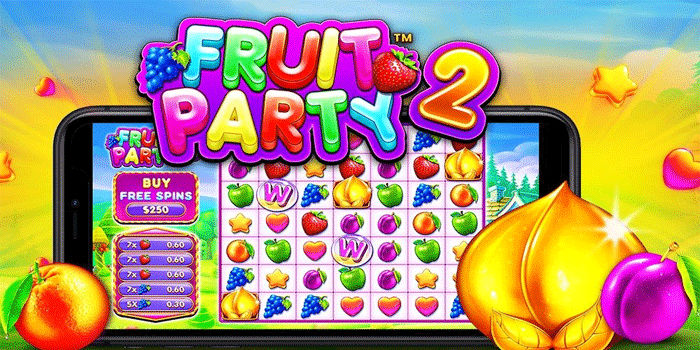
Unlike traditional paylines, this game relies on a grid-based system combined with cluster payouts, making pattern recognition an interesting topic for players seeking deeper understanding. This Super Spin Slots Arena article explores how grid layouts and clustering behavior can influence perception and decision-making during gameplay.
By analyzing clustering tendencies, symbol frequency, and grid distribution, players can develop a more informed perspective. This approach is especially relevant for those interested in the mechanics behind modern slot systems rather than relying purely on chance-based thinking.
Understanding The Grid Structure In Fruit Party Slot 2
The grid structure in Fruit Party Slot 2 operates on a fixed layout where symbols are displayed across multiple rows. This design eliminates traditional paylines and replaces them with a cluster-based system where matching symbols must connect adjacently.
Each spin generates a new arrangement within this grid, making every outcome independent while still visually presenting patterns. Players often perceive recurring formations, even though these are driven by random number generation systems.
Cluster Mechanics And Symbol Connectivity
Cluster mechanics are central to how wins are calculated in Fruit Party Slot 2. Instead of matching symbols along lines, players need a minimum number of identical symbols grouped together. These clusters must connect horizontally or vertically, creating a network of matching icons that trigger payouts.
Connectivity plays a key role in cluster success. While outcomes are random, understanding how clusters visually develop can help players recognize moments where symbol grouping appears more concentrated, potentially increasing engagement and strategic observation.
Symbol Distribution And Frequency Patterns
Symbol distribution across the grid is often perceived as uneven, leading players to believe certain symbols appear more frequently than others. While the underlying system ensures randomness, short-term sequences can create the illusion of patterns.
Tracking symbol appearance over multiple rounds can provide insight into how clusters might form, even if it does not influence actual outcomes. Observing whether certain symbols dominate sections of the grid helps players understand visual trends, which may enhance the overall gameplay experience by making it feel more interactive and analytical.
Also Read: Winning Tricks to Boost Your Balance on Money Train Slot
Cascading Effects And Grid Reconfiguration
One of the defining features of Fruit Party Slot 2 is the cascading effect, where winning clusters disappear and new symbols fall into place. This process can create chain reactions, leading to multiple consecutive wins within a single spin.
This dynamic reshaping of the grid adds complexity to pattern analysis. Players may observe how certain areas of the grid repeatedly produce clusters after cascades, giving the impression of “hot zones.” While these are not guaranteed, understanding how cascading influences symbol placement helps players appreciate the layered mechanics of the game.
Multiplier Behavior Within Clusters
Multipliers in Fruit Party Slot 2 appear randomly within winning clusters, significantly boosting potential payouts. These multipliers can stack when clusters overlap or when cascades occur, creating visually exciting moments.
Analyzing multiplier placement can lead to observations about how clusters expand during cascades. Although multipliers are random, players may notice patterns in how they coincide with dense symbol areas. This reinforces the idea that cluster size and grid positioning are key visual factors when interpreting gameplay outcomes.
Visual Pattern Recognition And Player Psychology
Human psychology plays a major role in how patterns are perceived in grid-based slot games. Players naturally look for order within randomness, often identifying repeating shapes or symbol groupings. This tendency can make the game feel more predictable, even when it is not.
Recognizing this psychological aspect is important for maintaining a balanced perspective. While pattern observation can enhance engagement, it should not be mistaken for a predictive tool. Understanding the difference between perceived and actual patterns allows players to enjoy the analytical side of the game without forming unrealistic expectations.
Conclusion
Grid and cluster pattern analysis in Fruit Party Slot 2 offers a fascinating way to explore the mechanics behind modern slot games. By understanding how symbols are distributed, how clusters form, and how cascades reshape the grid. Players gain a more structured perspective on gameplay.
Ultimately, the key lies in balancing observation with realism. While patterns can make the game more interesting, they do not determine outcomes. Embracing the randomness while appreciating the visual and mechanical complexity ensures a more enjoyable and informed experience for players exploring this dynamic slot format.